
Custom Underwear Waistband Logo Repeat: Cutting and Alignment Guide
Translate repeating waistband artwork into size-specific cutting and sewing references before bulk production.
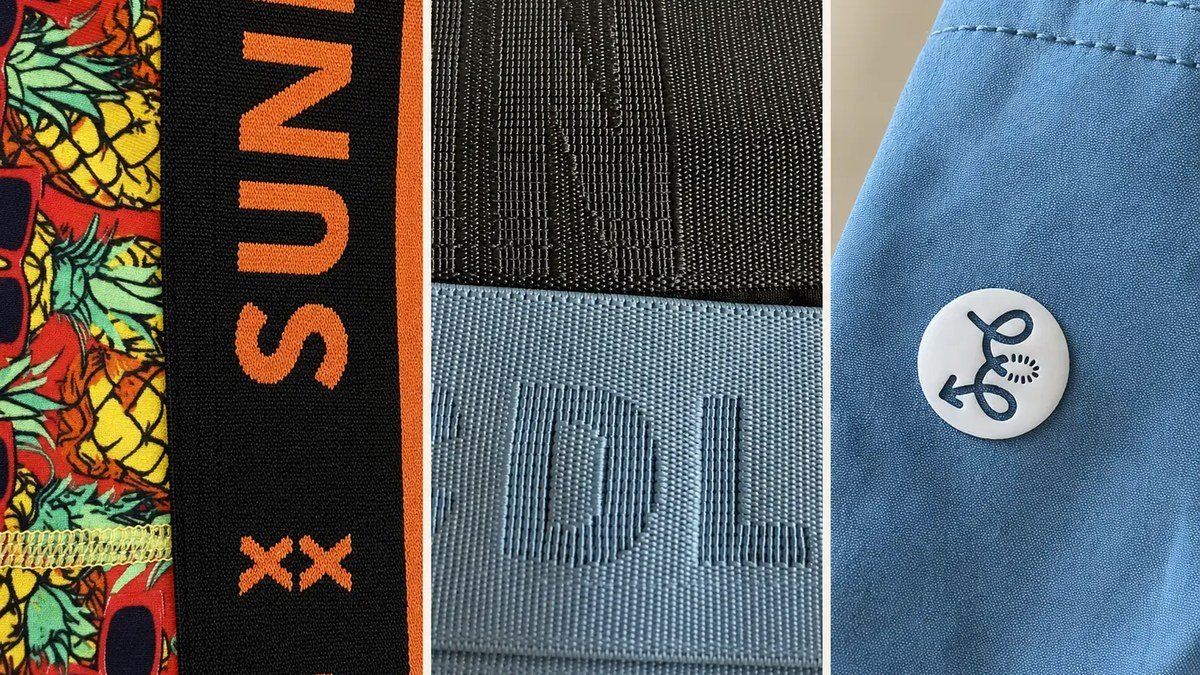
The artwork repeat is a material input; it is not automatically the garment cut length.
Center-front placement and the back join must be approved on the garment, not only on a flat strip.
Different waist lengths can shift the repeat, so one universal formula should not be promised.
Scope note: This independent update draft is linked to published Post 2450 for human review. It does not alter the live post. Repeat length, cutting reference, join position and overlap must be verified using the specific elastic, size set and sewing method.
In this guide
- Why Is Logo Repeat Different From Waistband Length?
- Define the Visual Position Before Cutting
- What Measurements Should the Factory Confirm?
- Why a Single Cutting Formula Can Be Misleading
- How Should Logo Placement Be Approved Across Sizes?
- What Should Be Checked During Sewing?
- When Should the Artwork and Cutting Plan Be Finalized?
- Frequently Asked Questions
- Check Your Custom Waistband Artwork Before Sampling
Direct answer: To align a repeating logo on a custom underwear waistband, the factory needs the approved logo repeat, waistband length by size, seam or join allowance, required front position and cutting reference. A visually centered logo in an artwork file does not guarantee that it will be centered on every finished garment. The elastic must also be evaluated at its intended sewing and wearing tension.
Why Is Logo Repeat Different From Waistband Length?
A jacquard waistband is usually made as continuous elastic with a repeating design. The logo repeat is the distance between corresponding points of consecutive motifs on that elastic. The cut length is the length of elastic prepared for a garment before or during waistband joining, according to the approved sewing method.
These are different measurements. The repeat is a branding and manufacturing parameter; the cut length depends on the size, elastic behavior, join method and approved garment fit. Buyers should not treat the repeat distance as the waistband circumference.
Define the Visual Position Before Cutting
Choose a reference point on the finished garment
For many boxer briefs, the brand wants a logo or the center of a wordmark aligned with the center front. Other designs may require a blank front or a logo positioned to one side. Mark the reference on a garment drawing and state whether it is measured from the center of the artwork or another defined point.
Decide where the join will sit
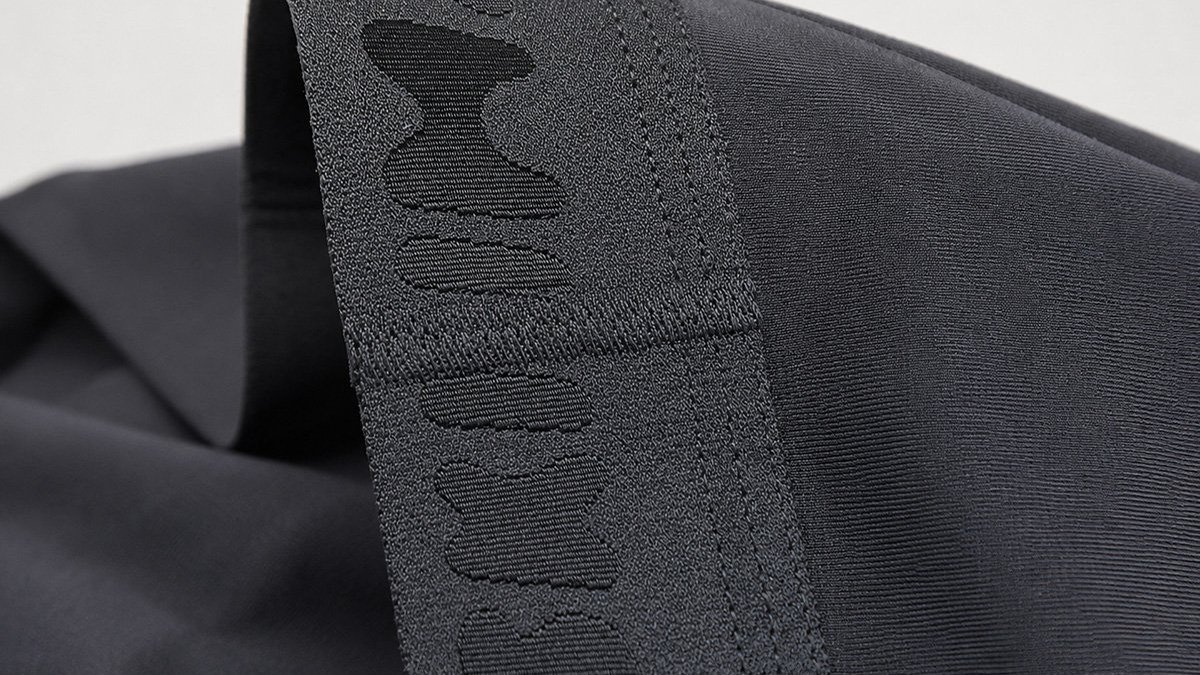
The waistband join may be positioned at the back or another approved location. If the artwork repeat is not coordinated with the join, a partial motif may appear at the seam. A small overlap or covered join can also change the visible result. Specify the approved join construction rather than assuming that every factory uses the same allowance.
Check the logo at the front and the join together
Perfectly centering one front logo and obtaining a perfectly matched motif at the join may not both be possible for every size with a fixed repeat. When there is a conflict, the brand should set a clear priority and approve the appearance for representative sizes.
What Measurements Should the Factory Confirm?
| Input | Why it matters | Approval question |
|---|---|---|
| Artwork repeat | Determines where each motif appears on the elastic | Is the repeat approved on a physical elastic sample? |
| Waistband width | Affects visible logo scale and finished appearance | Does the logo fit the approved width? |
| Size-specific elastic cut length | Depends on garment fit, elastic and joining method | Has each size been checked against the sample? |
| Front placement reference | Controls the position seen by the wearer | What point must align with center front? |
| Join and overlap | Changes the visible motif at the seam | Is the seam position and appearance approved? |
| Extension during sewing | Can change motif spacing and waistband tension | Is the attachment method approved on the garment? |
Why a Single Cutting Formula Can Be Misleading
A formula based only on the garment’s relaxed half-waist measurement can miss important factors. Elastic may be intentionally shorter than the garment opening, and different waistband constructions have different extension and recovery. The joining method may consume material or change the visible motif position.
For that reason, the correct cut length is a size-specific production decision validated against the approved garment, not a universal percentage or an arbitrary number of centimeters. If a factory uses a marker or cutting jig, its reference should match the approved logo position and size chart.
How Should Logo Placement Be Approved Across Sizes?
Start with the approved base size
Approve the front logo position, visible waistband height, join appearance and wearing tension on the actual sample. A flat strip alone cannot show the full result.
Review the size range
For smaller and larger sizes, confirm whether the motif remains visually balanced and whether the same repeat creates a different join appearance. The brand may choose a consistent front placement while accepting controlled variation at the back, or request another approved layout. Record that choice in the tech pack.
Lock the production reference
Save the approved artwork, repeat measurement, waistband specification and cutting/placement instructions as one controlled version. When the elastic supplier changes the repeat or material, reassess the cutting plan before bulk production.
What Should Be Checked During Sewing?
Production checks may include the front motif position, waistband twisting, seam alignment, joining quality, visible logo distortion and consistency across sizes. The garment should be reviewed both flat and in the agreed fitting condition, because the elastic may change appearance when extended.
Factory note: A repeat specification is not a substitute for a physical waistband-on-garment approval. Logo placement, seam construction and elastic tension must be reviewed together.
When Should the Artwork and Cutting Plan Be Finalized?
Finalize the waistband design before approving the production sample and confirm the size-specific placement instructions before bulk cutting. For broader development decisions, see the custom jacquard waistband guide and boxer brief measurements guide.
For fully customized orders during a normal production period, Sunin Underwear generally estimates approximately 60 calendar days. Peak-season full-custom orders may require approximately 60–75 calendar days. Final timing is project-specific and begins only after specifications, the approved sample or final production version, the required payment, materials and documents are confirmed and production scheduling is approved. International shipping is separate.
Frequently Asked Questions
What is a waistband logo repeat?
It is the distance between corresponding points of repeating motifs on a continuous waistband design. It is not the same as the garment’s waistband cut length.
Can the logo be centered on every size?
A consistent center-front reference can be specified, but the visible repeat and join appearance must be checked for the size range and approved construction.
Should the waistband be cut at the printed logo?
Not automatically. The cutting reference must account for the approved motif position, garment size, join method and elastic behavior.
Does the seam overlap affect logo placement?
It can. The join may hide part of the repeat or change the visible position, so the seam construction should be included in the placement plan.
Can a cutting rule be transferred to another elastic?
Only after review. A different width, repeat, stretch or recovery may change the appropriate cutting and sewing instructions.
Check Your Custom Waistband Artwork Before Sampling
Send Sunin Underwear your waistband artwork, intended width, logo placement reference, garment size range and preferred join appearance. We can review the information needed for a practical repeat and cutting plan.
Request a waistband placement review
Related resources: Sample Development · Quality Control
Approve the repeat on elastic and on the garment.
A repeat that looks correct on a supplier proof still needs a size-specific cutting and sewing reference before bulk.