
B2B fabric selection for men’s underwear should start with product performance and testing requirements, not a fibre name alone. Buyers need to specify the intended fit, hand feel, weight, stretch, recovery, shrinkage, color performance, care method and target market. The manufacturing process can then be built around a material that supports those requirements.
This procurement guide helps brands, importers and wholesalers prepare a clearer RFQ for custom boxer briefs, trunks, boxers and briefs.
Fibre content is not the complete fabric specification
Two fabrics labeled 95% cotton and 5% elastane may perform differently because of yarn, knit construction, weight, finishing, stretch direction and dye process. The same applies to modal, nylon, polyester and bamboo viscose blends.
A sourcing specification should include:
- fibre composition and verified terminology;
- knit or woven construction;
- target weight or acceptable range;
- width and usable width;
- stretch direction and extension requirement;
- recovery requirement;
- shrinkage and dimensional-stability requirement;
- pilling, colorfastness and appearance expectations;
- finish, hand feel and surface appearance;
- restricted-substance or market-specific requirements; and
- test method and acceptance criteria where applicable.
Final values should be confirmed for the actual program. Avoid treating a sample swatch, supplier sales name or generic online specification as production approval.
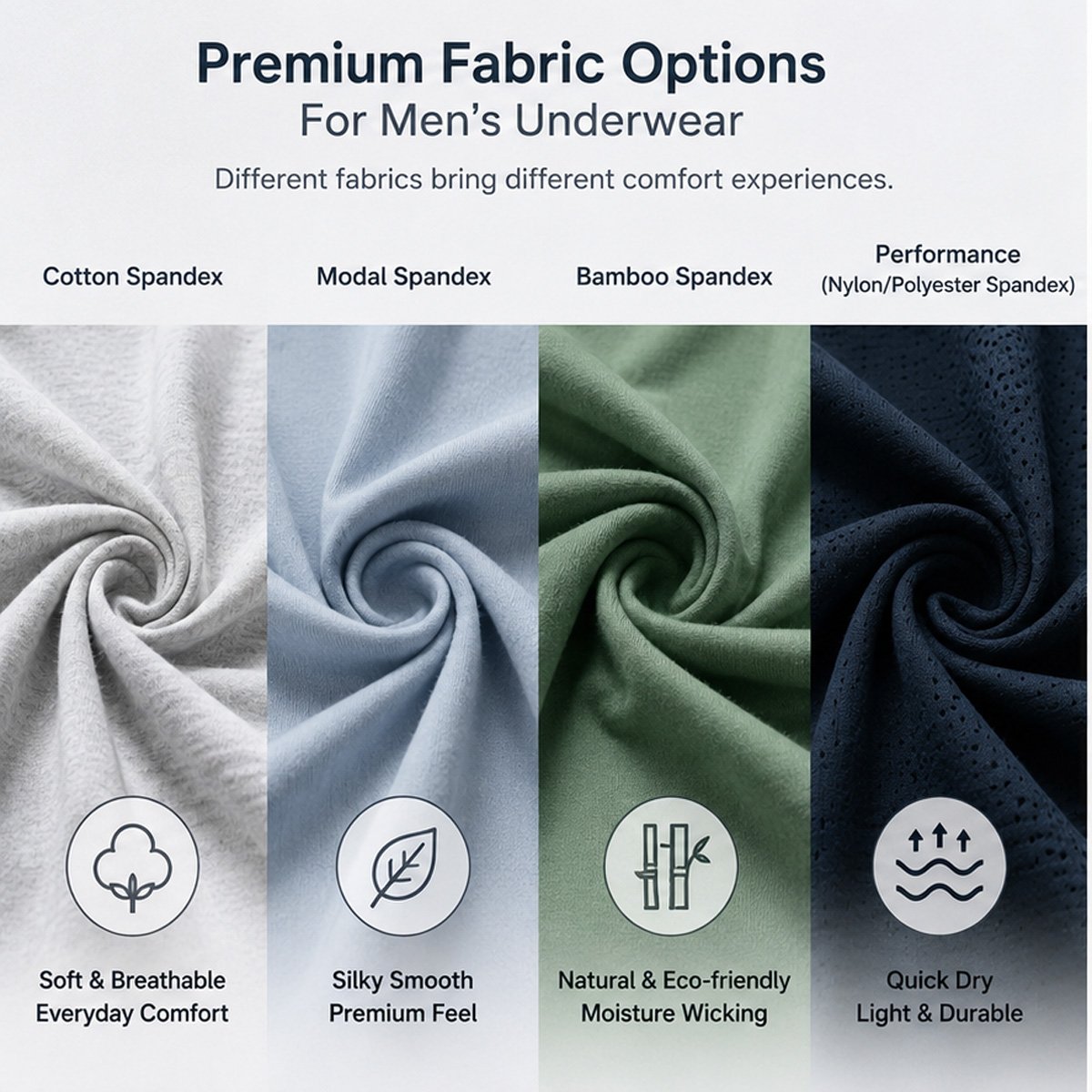
Common fabric directions
| Material direction | Why a buyer may consider it | What to verify |
|---|---|---|
| Cotton/elastane jersey | Familiar hand, everyday positioning and stretch fit | Recovery, shrinkage, pilling, colorfastness, surface hairiness and weight |
| Modal/elastane jersey | Soft hand, smooth surface and fluid drape | Recovery, pilling, dimensional stability, shade consistency and care performance |
| Bamboo viscose/elastane | Soft hand and a bamboo-derived fibre story | Correct fibre naming, source documents, recovery, pilling and substantiation of environmental claims |
| Nylon/elastane knit | Lightweight, smooth or performance-oriented construction | Opacity, snagging, heat setting, recovery, colorfastness and seam behavior |
| Polyester/elastane knit | Performance or quick-drying product direction | Surface feel, moisture-management method, odor claims, pilling and test evidence |
| Woven cotton or blends | Relaxed boxer construction and crisp appearance | Movement ease, shrinkage, seam slippage, wrinkling and colorfastness |
Use “bamboo viscose” accurately
Many apparel fabrics marketed as bamboo are regenerated cellulose fibres produced through a viscose process. When that is the supplied material, describe it as bamboo viscose rather than implying that the finished fabric is untreated natural bamboo fibre.
Claims such as antibacterial, sustainable or environmentally superior require evidence relevant to the exact fibre, finish, test method and market. A material name alone does not substantiate those claims.
Fabric weight must match the product
GSM is useful, but heavier is not automatically better. Weight affects opacity, drape, heat, drying, support and consumption. A soft modal trunk, an everyday cotton boxer brief and a lightweight performance style may require different ranges.
Approve weight together with construction and finish. A tightly knitted lighter fabric may feel more stable than a heavier but loose construction. State a realistic tolerance and use the same measurement method for approval and incoming inspection.
Stretch and recovery are different
Stretch describes how far a material extends. Recovery describes how well it returns. Men’s underwear needs enough extension for dressing and movement, but poor recovery can lead to loose legs, pouch instability or waistband mismatch.
Specify the direction of stretch and how the fabric will be oriented in the garment. Review body fabric, pouch lining, leg finish and waistband as a system. Components that extend at very different rates can concentrate pressure at seams or distort the fit.
Color, printing and finishing decisions
Solid dyeing
Confirm color reference, lab-dip approval process, shade tolerance and any colorfastness requirements. Dark and saturated colors may require additional attention depending on material and care method.
Choose print method based on fibre, artwork, color count, stretch and surface requirement. Review strike-offs on the intended production fabric. Stretch the sample to check whitening, cracking, distortion and hand feel where relevant.
Functional finishes
Cooling, moisture-management, anti-odor or antimicrobial claims should be defined carefully and supported by suitable testing if the brand plans to make them. Confirm whether performance comes from fibre, fabric construction or an applied finish, and whether it remains after the required care cycles.
Waistband selection is part of material engineering
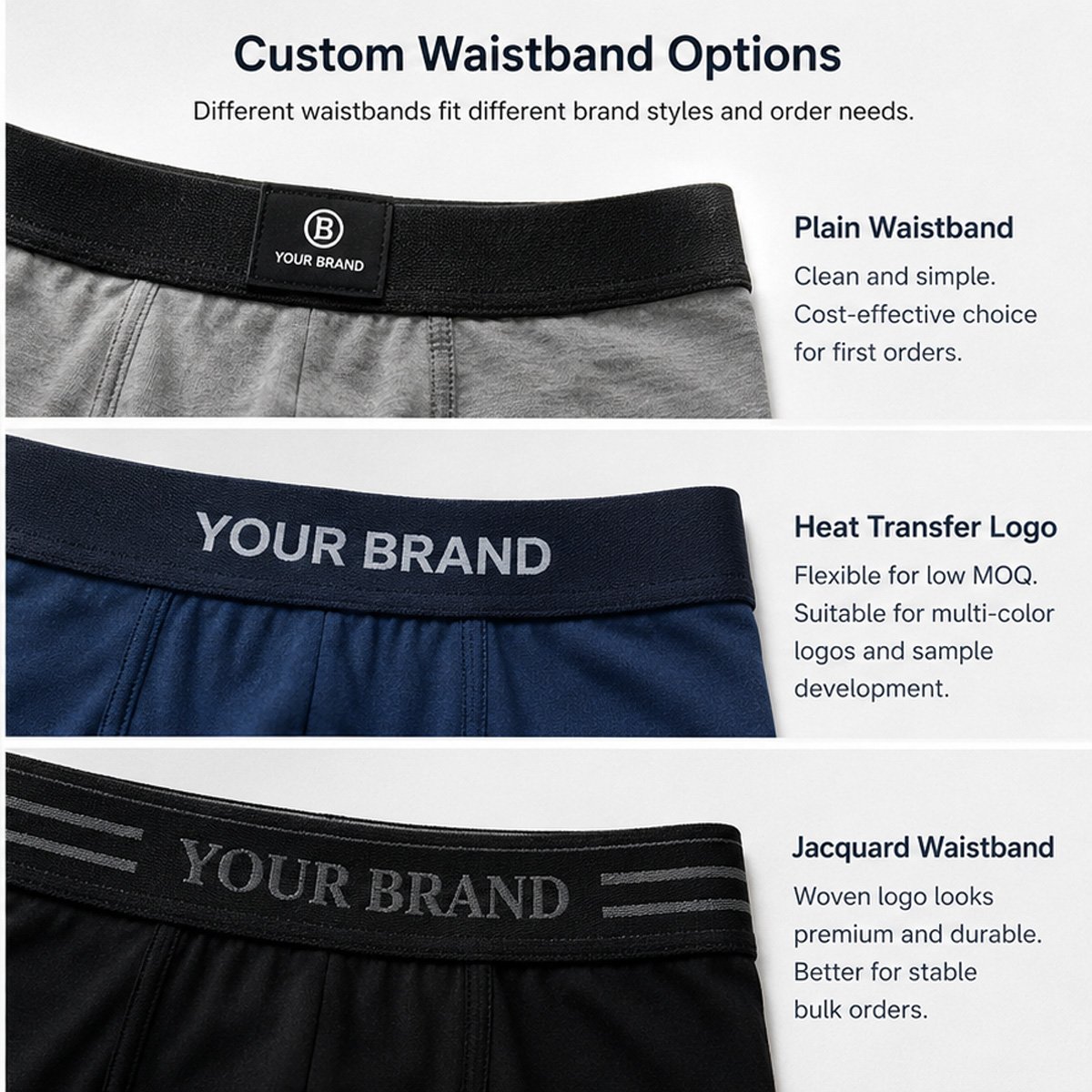
A waistband specification should cover width, thickness, extension, recovery, logo method, repeat, yarn colors, inside hand feel and join construction. Jacquard, printed and applied-logo elastics have different development considerations.
The elastic must work with the body fabric and target fit. A rigid or heavy waistband can overpower a soft, lightweight garment. A very soft waistband may not provide the required hold.
From RFQ to approved production specification
- Product brief: define silhouette, wearer, use case, target fit, price position and market.
- Material direction: state composition, construction, weight, hand feel, stretch and performance requirements.
- Supplier review: identify available materials or custom-development needs and any material minimums.
- Swatch and test review: compare actual options and supporting documents.
- Sample development: make the garment in the proposed production material.
- Fit and care evaluation: record changes after fitting and agreed tests.
- Approval: lock fabric reference, color, construction, measurements, trims, labels and packaging.
- Bulk controls: verify incoming materials and production against the approved specification.
A sample timeline depends on whether the fabric, waistband, pattern and packaging already exist or require development. It should be quoted after the specification is reviewed rather than promoted as a fixed public promise.
Supplier documents and factory claims are not the same
A fabric mill, yarn supplier, dyehouse or trim supplier may provide certificates or test reports for a specific material or batch. Those documents do not automatically certify the underwear factory, every material offered by the factory or every finished garment.
Ask who issued the document, what product or facility it covers, the validity period and whether the report applies to the proposed order. For finished-product testing, define the required method, market and sample before production.
Commercial planning: MOQ and lead time
Sunin Underwear’s standard starting MOQ is generally 1,000 pieces per style. Final feasibility and color-size splits depend on fabric, colors, custom waistband, packaging and processes. A custom-dyed material or elastic may carry its own minimum that is separate from garment sewing.
Regular bulk production is approximately 60 days. Peak-season or custom-material projects may require approximately 60–75 days. The production period is counted after specifications, approved samples, payment and all production documents are confirmed.
B2B fabric RFQ checklist
- style, intended use and target market;
- tech pack, measurements and size range;
- composition and construction;
- target GSM and tolerance;
- stretch and recovery expectations;
- color, print and finish;
- shrinkage, pilling and colorfastness requirements;
- restricted-substance and market requirements;
- waistband, labels and packaging;
- quantity by style, color and size; and
- required sample, test and approval schedule.
Frequently asked questions
Is modal always more premium than cotton?
No. Positioning depends on the complete fabric and garment. A well-developed cotton jersey can outperform an unsuitable modal fabric for a specific product. Compare hand feel, recovery, pilling, shrinkage, color and construction.
Can a fabric certificate be used for every order?
Not automatically. Confirm the issuer, scope, material or batch, test method and validity. A supplier document is not proof that every finished garment or the factory itself has the same certification.
What fabric is suitable for pouch underwear?
The choice depends on support, volume, lining and target use. The body and pouch materials need compatible stretch and recovery. See the pouch design guide for the construction checklist.
Can colors be split freely within 1,000 pieces?
Not always. Fabric dyeing, printing, elastic, packaging and the number of size combinations can create separate minimums. Confirm the complete assortment before relying on a per-color quantity.
Review a fabric and process specification
Sunin Underwear develops mid-to-high-end OEM and ODM men’s underwear for brands, importers, wholesalers and product teams. Send your fabric specification, tech pack, reference sample and planned quantity through the Contact page. You may also use WhatsApp for an initial discussion.