
Fit and construction guide
Pouch Underwear Design Guide for OEM & Private Label Development
A pouch is a three-dimensional product-development decision, not a single feature that can be added to every underwear pattern. Its support, space and appearance come from the relationship between panel shape, fabric stretch, lining, seam placement, rise, waistband and the wearer’s intended activity.
Decisions this guide helps you control
The front of men’s underwear can be developed as a flat panel, shaped through curved seams, built with multiple panels, lined for support, or opened w…
Construction Characteristics Key buyer decisions Flat or lightly shaped front Simple visual line and controlled volume Stretch, lining, support level …
Describe the intended wearer experience in operational terms. Is the product an everyday boxer brief, a close athletic trunk, a relaxed brief or a lon…
In this guide
- 01What a pouch changes
- 02Common pouch constructions for product development
- 031. Start with the support brief
- 042. Balance volume, position and opening
- 053. Select seams for shape and comfort
- 064. Match lining and body fabric
- 075. Decide whether a fly is functional or visual
- 086. Grade the pouch with the complete garment
- 09Sample review checklist
- 10Information to include in a pouch-underwear RFQ
- 11Frequently asked questions
A pouch is a three-dimensional product-development decision, not a single feature that can be added to every underwear pattern. Its support, space and appearance come from the relationship between panel shape, fabric stretch, lining, seam placement, rise, waistband and the wearer’s intended activity.
For OEM and private label buyers, the practical question is not “Which pouch is best?” It is “Which pouch construction matches this brand’s fit promise and target user, and how will it be tested before bulk production?”
What a pouch changes
The front of men’s underwear can be developed as a flat panel, shaped through curved seams, built with multiple panels, lined for support, or opened with a fly. Each choice changes volume, hold, visual shape, production steps and seam feel.
A more contoured shape does not automatically mean more comfort. If the pouch is too shallow, too deep, too narrow or positioned at the wrong height for the complete pattern, the wearer may experience pressure, movement or repeated adjustment. Fit must be evaluated with the garment, not from the pouch panel alone.
Common pouch constructions for product development
| Construction | Characteristics | Key buyer decisions |
|---|---|---|
| Flat or lightly shaped front | Simple visual line and controlled volume | Stretch, lining, support level and front-rise balance |
| Center-seam contoured pouch | Curved seam creates three-dimensional space | Seam curve, seam feel, symmetry and top-to-bottom volume |
| Multi-panel anatomical pouch | Panel geometry distributes shaping across several seams | Panel position, seam bulk, material combination and repeatability |
| Double-layer pouch | Additional layer can change support, opacity and stability | Lining material, stretch compatibility, heat and edge finishing |
| Fly pouch | Includes a functional or decorative opening | Opening direction, overlap, access, security and layer bulk |
| Mesh or zoned pouch | Uses a different material in all or part of the front | Recovery, transparency, durability, seam compatibility and intended ventilation |
1. Start with the support brief
Describe the intended wearer experience in operational terms. Is the product an everyday boxer brief, a close athletic trunk, a relaxed brief or a long-leg anti-chafing style? Does the brand want gentle hold, a clearly contoured appearance, additional separation or a minimal front profile?
A reference sample can show direction, but buyers should identify what works and what does not. Comments such as “retain the upper support but add lower volume” are more useful than “make it more comfortable.”
2. Balance volume, position and opening
Pouch volume is distributed vertically and horizontally. Changing only depth may move the garment away from the body, while changing the upper opening can alter hold and stability. The pouch must connect smoothly to the front rise, crotch and leg.
Fixed public dimensions or angles are not appropriate for every style or size range. The correct geometry depends on the full pattern, fabric behavior, target fit and grading. Dimensions should be approved through samples and recorded in the project specification.
3. Select seams for shape and comfort
A center seam can efficiently create shape, but its allowance, thread, stitch and placement must be comfortable. Multi-panel designs can distribute shaping but add construction steps and more seam intersections. A seam-free visual effect may require shaping elsewhere in the pattern or a material with different molding behavior.
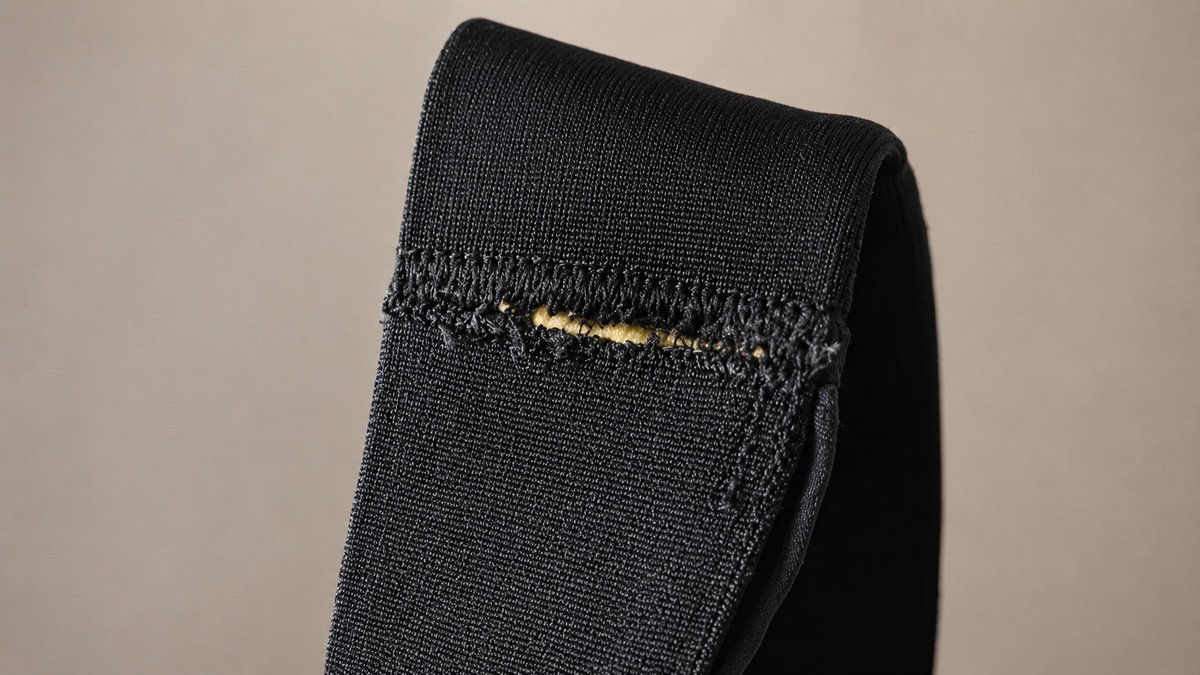
Review the inside as carefully as the outside. Raised allowances, hard intersections or bulky reinforcement can affect the wearer even when the external appearance is clean.
4. Match lining and body fabric
The pouch and body do not have to use identical materials, but their stretch and recovery need to work together. A stable lining over a highly elastic shell may restrict the intended shape. Two very soft layers may create more movement than the product brief allows.
Evaluate:
- fibre content and knit construction;
- fabric weight and thickness;
- two-way or four-way stretch behavior;
- recovery after extension;
- shrinkage compatibility;
- surface friction and seam handling;
- opacity and color matching; and
- care and testing requirements.
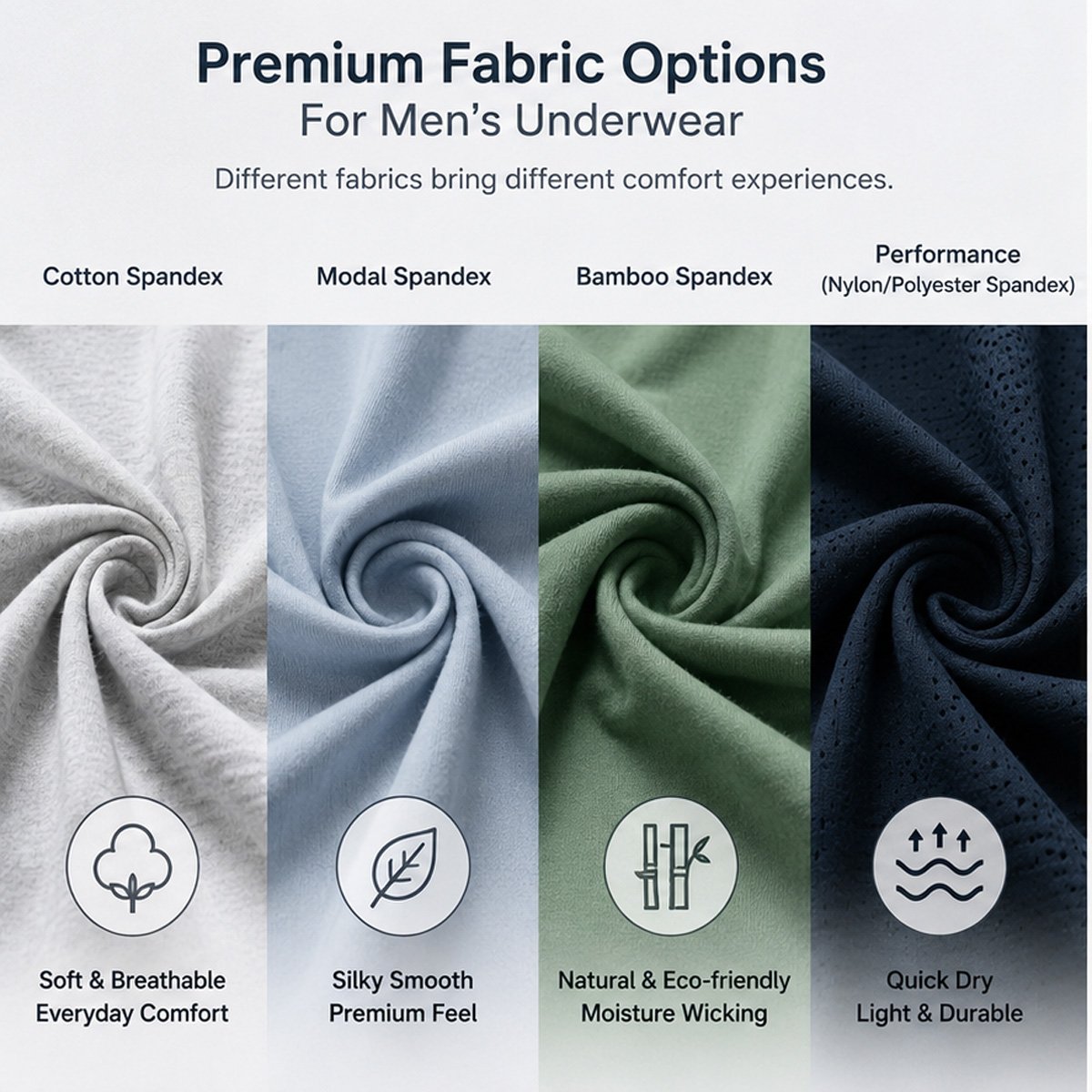
Modal/elastane may support a soft, fluid product; cotton/elastane can suit familiar everyday positioning; nylon or polyester blends can be considered for lighter or performance-oriented designs. Final suitability depends on the actual fabric specification, not the fibre label alone.
5. Decide whether a fly is functional or visual
A fly changes both pattern and layer structure. Confirm whether it must function, which direction it opens, how much overlap is needed, and whether the opening stays secure in movement. The fly edge should remain smooth and stable after washing.
If the design does not require access, a decorative fly should be identified as decorative in the specification to prevent different interpretations between sample and bulk production.
6. Grade the pouch with the complete garment
Scaling every pouch dimension by the same percentage can create imbalance. Pouch width, height, depth, rise and surrounding panels need coordinated grade rules. Evaluate the base sample and additional relevant sizes for the intended market rather than approving the full range from one size only.
The grading review should also check waistband position, seat coverage and leg opening. A pouch may appear wrong when the underlying issue is elsewhere in the pattern.
Sample review checklist
- Appearance: Is the pouch symmetrical and consistent with the design?
- Position: Does it sit at the intended height without pulling the waistband or crotch?
- Support: Does it provide the agreed hold without excessive pressure?
- Movement: Check walking, sitting, bending and the product’s intended activity.
- Seam feel: Inspect allowances, intersections, fly edges and lining edges from the inside.
- Recovery: Does the front return to shape after extension?
- Care performance: Review dimensional change, distortion and seam condition after the agreed care test.
- Size range: Confirm that grade rules work beyond the base size.
Record revisions on the measurement chart and construction sheet. Avoid approving only from photos, because front depth, pressure and seam feel cannot be assessed reliably from an image.
Information to include in a pouch-underwear RFQ
- silhouette: boxer brief, trunk, brief or long-leg;
- target user, activity and support level;
- reference garment or annotated images;
- front rise, pouch measurements and grade expectations;
- flat, contoured, multi-panel, lined or fly construction;
- body and lining fabric requirements;
- seam type and inside comfort requirements;
- waistband artwork and specification;
- size range, colors, labels and packaging; and
- planned order quantity and approval schedule.
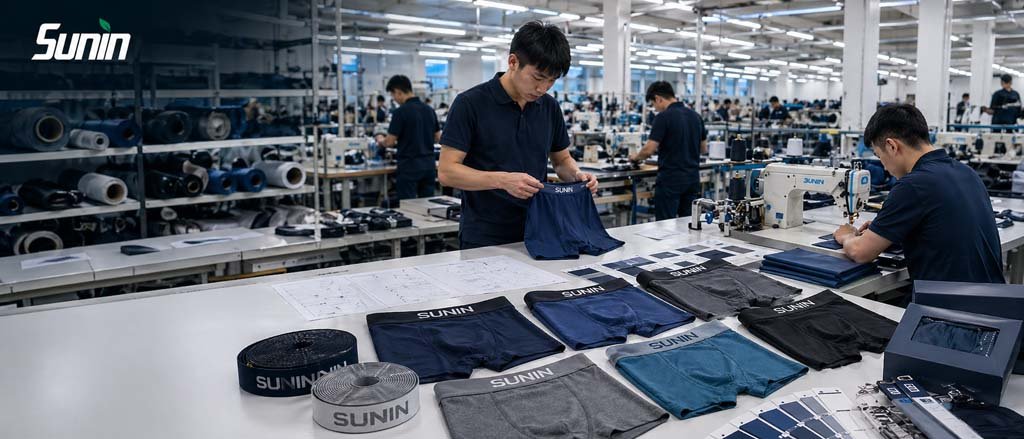
Sunin Underwear’s standard starting MOQ is generally 1,000 pieces per style. Final feasibility and color-size splits depend on the selected fabric, waistband, packaging and construction.
Frequently asked questions
Practical answers for product development and procurement decisions.
Is a deeper pouch always more supportive?
No. Depth adds space, while support also depends on opening, panel shape, material recovery, rise and surrounding pattern. A pouch can be deep but unstable, or shallow and overly restrictive.
Is a center seam uncomfortable?
Not necessarily. Comfort depends on seam placement, allowance, stitch, thread, fabric and wearer fit. The inside construction should be reviewed on samples.
Can a brand copy the pouch dimensions from another product?
A reference garment can provide a starting point, but dimensions should be adapted to the new pattern, fabric, size range and design. Buyers should also ensure they have the right to use any proprietary design elements.
Can pouch design be changed after bulk production starts?
Structural changes should be completed and approved before production documents are locked. A pouch change may affect pattern pieces, consumption, sewing operations, fit and timing.
What is the usual bulk-production timing?
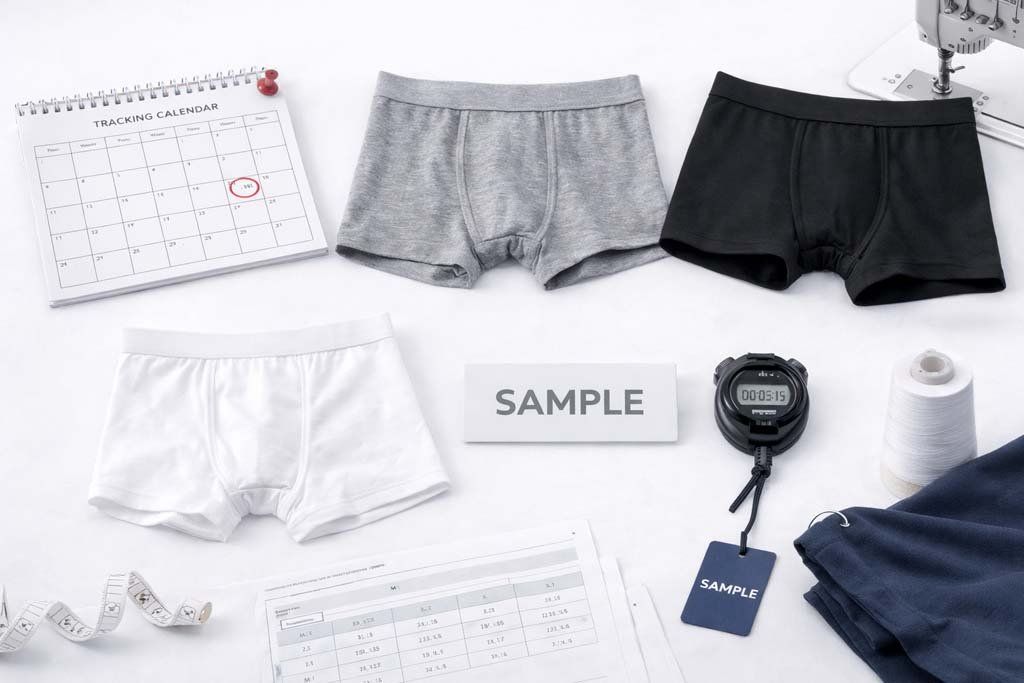
Regular bulk production is approximately 60 days. Peak-season or custom-material projects may require about 60–75 days, counted after specifications, samples, payment and production documents are confirmed.
Related resources
Planning a men’s underwear project?
Share the style, expected quantity, fabric, colors, sizes, waistband, packaging and destination already known.