
Silhouette selection guide
Types of Men’s Underwear for Private Label Product Development
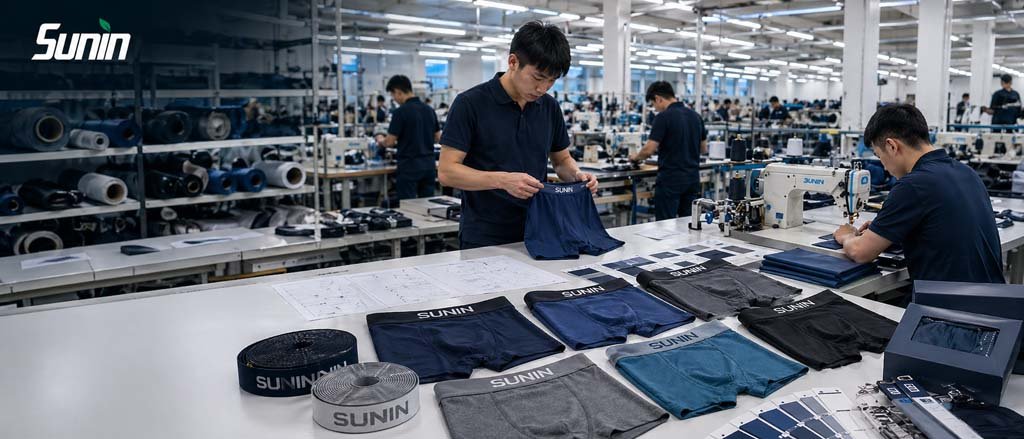
For most private label programs, the right men’s underwear type is the one that matches the target wearer, retail channel, price position and fit promise—not the style with the broadest general popularity. Boxer briefs offer balanced coverage and support; trunks create a shorter, squarer silhouette; briefs remove leg coverage; boxers provide a relaxed fit; and long-leg boxer briefs add coverage for anti-chafing or performance positioning.
Decisions this guide helps you control
Type Core fit characteristic Development priorities Common positioning Boxer brief Close fit with moderate thigh coverage Leg stability, pouch support…
Boxer briefs combine a fitted body with leg coverage. They can support a broad everyday range, but “boxer brief” is not one fixed block. Back rise, in…
Trunks have a shorter leg and often a squarer appearance. Their reduced inseam can suit fashion and warm-weather collections, but it leaves less lengt…
In this guide
- 01Men’s underwear type comparison
- 021. Boxer briefs
- 032. Trunks
- 043. Briefs
- 054. Boxers
- 065. Long-leg boxer briefs
- 07How to choose a first private label assortment
- 08Fit variables that matter across every type
- 09Fabric changes how a silhouette behaves
- 10Information to include in an RFQ
- 11Frequently asked questions
For most private label programs, the right men’s underwear type is the one that matches the target wearer, retail channel, price position and fit promise—not the style with the broadest general popularity. Boxer briefs offer balanced coverage and support; trunks create a shorter, squarer silhouette; briefs remove leg coverage; boxers provide a relaxed fit; and long-leg boxer briefs add coverage for anti-chafing or performance positioning.
This guide compares the main silhouettes from a B2B product-development perspective so brands, importers and wholesalers can build a focused assortment before sampling.
Men’s underwear type comparison
| Type | Core fit characteristic | Development priorities | Common positioning |
|---|---|---|---|
| Boxer brief | Close fit with moderate thigh coverage | Leg stability, pouch support, seat fit, waistband balance | Everyday, premium basics, athletic lifestyle |
| Trunk | Close fit with a shorter leg and square shape | Leg opening comfort, ride-up control, proportional pouch | Modern, fashion-led, warm-weather collections |
| Brief | Close support without leg coverage | Leg curve, seat coverage, pouch shape, elastic comfort | Classic, sport, minimal-coverage ranges |
| Woven or knit boxer | Relaxed body with loose leg | Rise, fly, seat ease, hem and fabric mobility | Lounge, sleep, traditional or relaxed basics |
| Long-leg boxer brief | Close fit with extended thigh coverage | Leg anchoring, fabric recovery, inseam comfort, chafing control | Performance, workwear, travel, extended-size programs |
1. Boxer briefs
Boxer briefs combine a fitted body with leg coverage. They can support a broad everyday range, but “boxer brief” is not one fixed block. Back rise, inseam, leg opening, pouch volume and fabric recovery all change the wearer experience.
For a first development, buyers should define:
- target inseam and finished side length;
- low, mid or higher-rise position;
- flat-front, double-layer or contoured pouch;
- expected compression or relaxed support;
- leg opening construction and ride-up requirement; and
- waistband width, extension, logo and hand feel.
A reference garment is useful, but it should be accompanied by a measurement chart and comments explaining what must be retained or changed.
2. Trunks
Trunks have a shorter leg and often a squarer appearance. Their reduced inseam can suit fashion and warm-weather collections, but it leaves less length to stabilize the leg. Pattern balance and fabric recovery therefore have a strong influence on ride-up and comfort.
When converting a boxer brief into a trunk, simply cutting the leg shorter may not be enough. The leg opening, crotch, seat and pouch proportions should be reviewed together.
3. Briefs
Briefs provide support without thigh coverage. They require careful control of the leg curve because the elastic or binding sits close to the groin and seat. Too little coverage can create movement; too much tension can mark the body or distort the shape.
Useful specification points include front and back rise, side-seam height, seat coverage, pouch construction and the type of leg finish. Fit evaluation should cover sitting and walking as well as a static fitting.
4. Boxers
Boxers may be made from woven fabric for a crisp, traditional hand or from knit fabric for a softer, more flexible fit. They are normally more relaxed than boxer briefs and can include a functional or decorative fly.
Development decisions include seat ease, side length, hem width, fly construction, panel layout and waistband system. Woven fabrics need enough pattern ease for movement because they may provide less stretch than jersey.
5. Long-leg boxer briefs
Long-leg styles add thigh coverage and can be designed for anti-chafing, work, travel or performance use. The main challenge is keeping the leg stable without excessive compression. Inseam length alone does not prevent ride-up; circumference, recovery, seam placement and activity level also matter.
For performance positioning, define whether moisture management, ventilation panels or flat seam construction are actual product requirements. These features should be supported by suitable materials and testing rather than broad marketing claims.
How to choose a first private label assortment
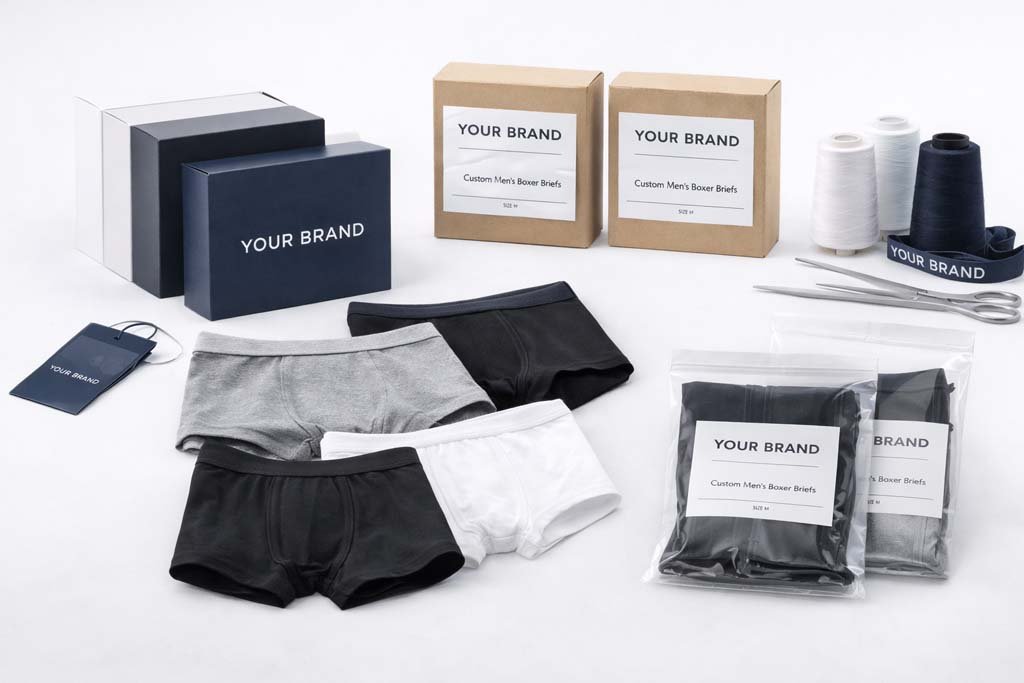
A focused assortment is usually easier to develop and manufacture than several similar styles launched at the same time. Start with the commercial problem the collection must solve:
- Everyday core: consider a balanced boxer brief or trunk with a clear fit and material story.
- Minimal coverage: use a brief when the target channel and wearer preference support it.
- Relaxed or lounge: consider a woven or knit boxer with sufficient seat ease.
- Anti-chafing or work: evaluate a longer leg with stable recovery and comfortable seams.
- Performance: specify the activity, moisture, ventilation and support requirements before choosing materials.
Avoid splitting the opening order across too many styles, colors and small size quantities before the core fit has been validated. Sunin Underwear’s standard starting MOQ is generally 1,000 pieces per style, while workable color and size splits depend on the material, waistband, packaging and process requirements.
Fit variables that matter across every type
Rise and seat coverage
Rise affects where the waistband sits and how the garment moves with the body. Seat width and back rise need to support the intended size range without pulling the waistband down or concentrating stress at the back seam.
Pouch shape
A flat front, double-layer panel and contoured pouch deliver different support and visual outcomes. Define volume, panel lines, fly requirement, lining and seam placement. See the B2B pouch design guide for a deeper development checklist.
Leg opening
The leg must balance hold and comfort. Its performance depends on pattern circumference, fabric recovery, hem construction and inseam—not only elastic tension.
Waistband
Confirm width, logo method, repeat, colors, extension, recovery, thickness and inside hand feel. A visually strong elastic may still be unsuitable if it does not recover consistently with the body fabric.
Fabric changes how a silhouette behaves
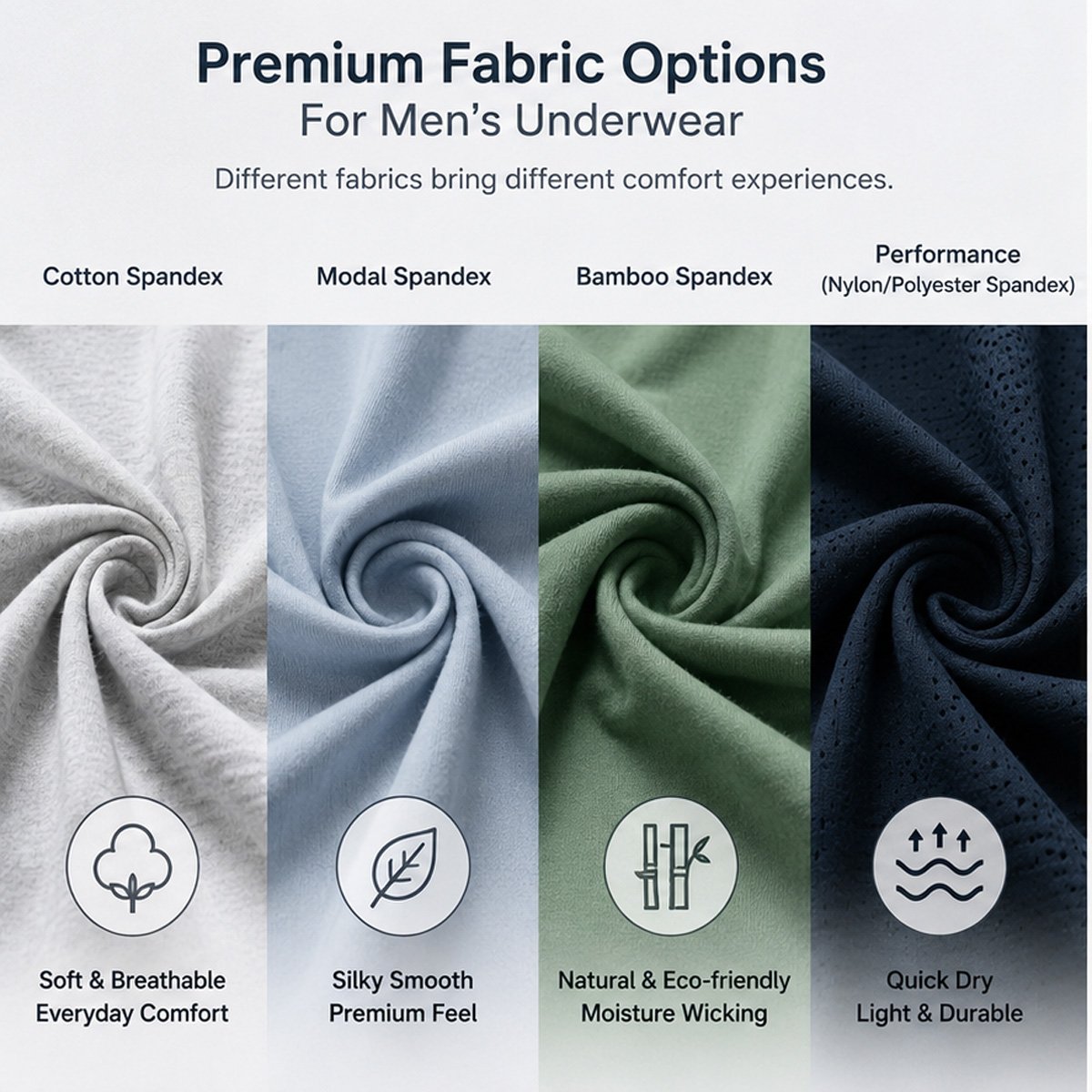
Fibre percentage is only the start of a specification. Cotton/elastane jersey can support familiar everyday positioning. Modal/elastane can provide a soft hand and fluid drape. Nylon or polyester blends can be considered for lighter or performance-oriented constructions. Bamboo-derived apparel fabric should be described accurately as bamboo viscose when that is the supplied fibre.
Fabric construction, weight, stretch direction, recovery, shrinkage, pilling, colorfastness and finishing all affect fit. Review these variables against the chosen silhouette and care requirements. For more detail, use the B2B fabric and process selection guide.
Information to include in an RFQ
- Product type and intended use.
- Target market, fit and size range.
- Reference sample, sketch or tech pack.
- Key measurements and grading requirements.
- Fabric composition, weight, color and performance expectations.
- Pouch, fly, seam and leg-opening construction.
- Waistband artwork and specifications.
- Labels, packaging and compliance requirements.
- Planned quantity by style, color and size.
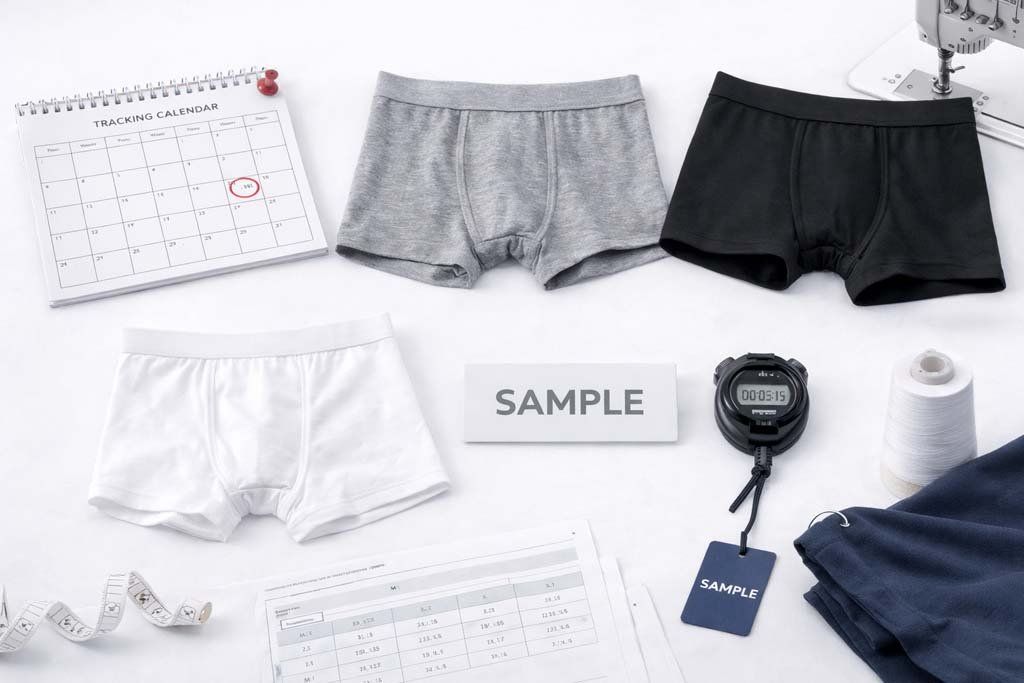
- Target launch window and sample approval process.
Frequently asked questions
Practical answers for product development and procurement decisions.
Which men’s underwear type is safest for a new brand?
There is no universal safest type. A boxer brief can address a broad everyday use case, but the correct starting product depends on the target wearer, channel, price position and brand promise.
Can one pattern be used for both trunks and boxer briefs?
They may share a development base, but the shorter leg changes leg-opening stability and proportion. The trunk should be fit-tested as its own product rather than treated as a simple cut-down version.
How many types should a first collection include?
Keep the range focused enough to validate fit and demand. The practical number depends on the MOQ, color-size split and available development budget. One well-defined core style is often easier to control than several lightly differentiated products.
How long does bulk production take?
Regular bulk production is approximately 60 days. Peak-season or custom-material projects may require about 60–75 days. Timing is counted after specifications, samples, payment and all production documents are confirmed.
Related resources
Planning a men’s underwear project?
Share the style, expected quantity, fabric, colors, sizes, waistband, packaging and destination already known.