
Brand component guide
Custom Jacquard Waistbands for Men’s Underwear: MOQ, Design and Production Guide
Plan logo repeat, colors, width, stretch and supplier minimums before a custom waistband enters sampling or bulk production.
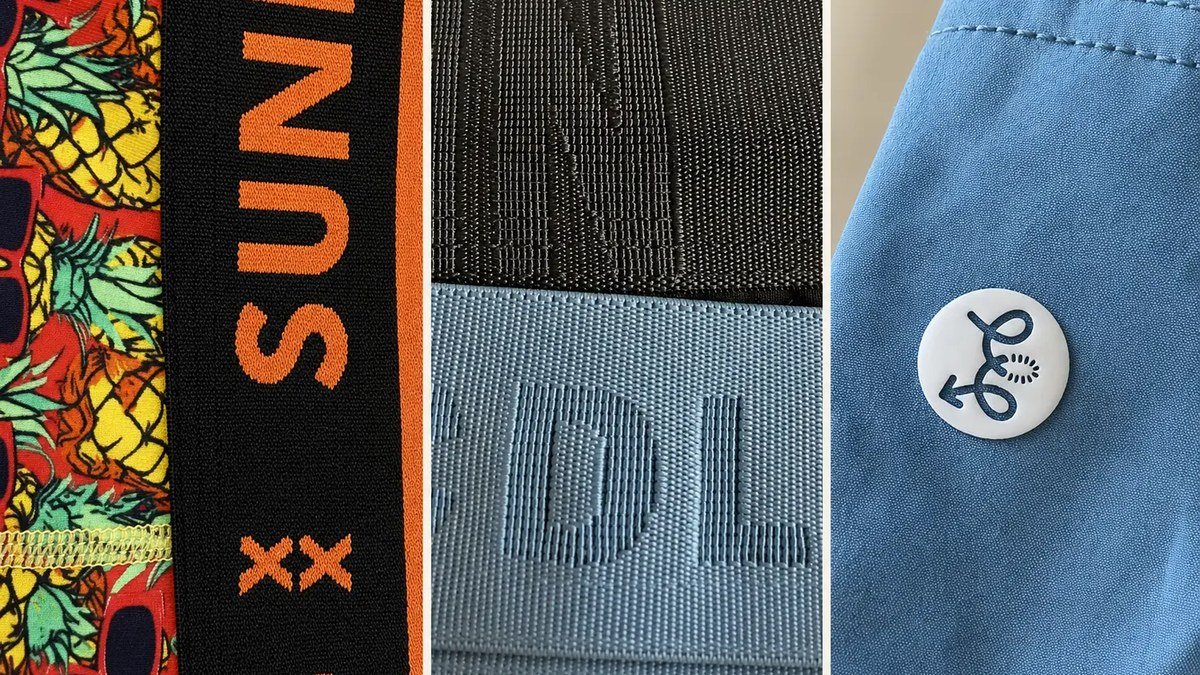
ALT: Custom jacquard waistband for men’s underwear
In This Guide
Logo repeat, color, width and stretch should be reviewed before garment sampling.
Elastic supplier minimums may differ from the garment order quantity.
Approve artwork, joins, tension and recovery before bulk production.
Table of contents
For a private label men’s underwear program, a custom jacquard waistband is not only a place for a logo. It is a separate engineered component whose artwork, color count, width, stretch and production minimum can affect sampling, cost and bulk planning.
Why the waistband should be specified before sampling
A useful waistband brief should define width, base color, logo artwork, logo repeat, yarn colors, stretch and recovery expectations, inside hand feel and the intended garment fit. The factory can then review whether the proposed elastic works with the body fabric and order structure. Buyers planning a complete private label program can also review Sunin’s custom men’s underwear manufacturing service.
What creates the MOQ for a custom jacquard waistband?
Garment MOQ and elastic MOQ are related, but they are not the same thing. A jacquard elastic supplier normally has to set up yarns, machine programming and a continuous production length. The resulting elastic quantity must then be converted into the number of garments that can use it. This means a brand should not assume that dividing 1,000 garments into many waistband colors will always be practical. For wider order-planning context, see our guide to starting with a 1,000-piece MOQ.
1. Number of waistband colors
One black waistband used across several body colors is usually easier to plan than separate custom elastic for every colorway. If each colorway needs its own base color and logo yarn combination, the component minimum can become the limiting factor.
2. Logo repeat and artwork
Long wordmarks, complex symbols and very small lettering can behave differently when woven into elastic. The repeat length should be reviewed around the complete waist circumference so that the join does not create an awkward partial logo. Artwork should be tested at actual scale rather than approved only from a screen mock-up.
3. Width and elastic structure
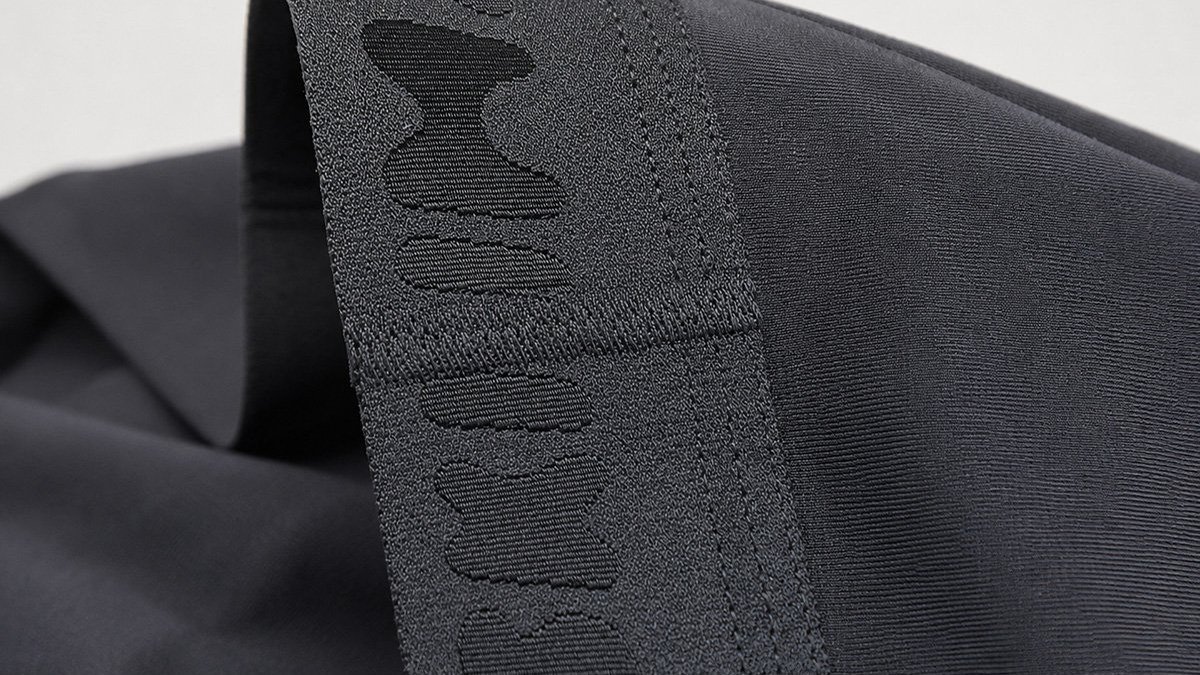
The correct waistband width depends on the product. Width, thickness and internal construction influence tension and recovery. A soft modal body may require a different balance from a heavier cotton-spandex body. Our B2B fabric and process selection guide explains why the body material and components should be reviewed as one system.
How to review a waistband sample
Do not judge the elastic only while it is lying flat. Stretch it repeatedly and then review recovery, logo distortion, edge curl, yarn exposure and hand feel. Sew it onto the intended garment sample and check whether the tension works with the pattern. A waistband that looks premium on a roll can still feel too rigid or too loose on the finished underwear.
How Sunin Underwear plans waistband development
For custom men’s underwear, Sunin Underwear reviews the waistband together with fabric, style, colors, size range and planned quantity. The usual starting MOQ for custom men’s underwear is around 1,000 pieces per style, while the final workable color split depends on the selected fabric, waistband and other custom components. Custom elastic may create its own material minimum, so the project should be reviewed as one production system rather than as separate decorative details.
Regular bulk production is approximately 60 calendar days after specifications, approved samples, payment and all production information are confirmed. Peak-season or custom-material projects may require approximately 60–75 calendar days. These ranges cover production only and exclude international shipping; they are planning estimates rather than guaranteed delivery dates.
Information to send before requesting a waistband quotation
Send the garment style, expected quantity, number of colors, size range, waistband width, base color, vector logo, preferred logo colors and a reference showing the intended visual effect. If you already have an existing waistband, include its flat width and a photo under stretch. This gives the development team enough information to identify obvious feasibility issues before sampling.
Frequently asked questions
Can a custom jacquard waistband be made for a 1,000-piece underwear order?
Often yes, but feasibility depends on elastic length requirements, colors, width, logo design and how the garment quantity is divided. The waistband minimum should be checked for the specific artwork.
Can one waistband be used across several underwear colors?
Yes, when the branding and color direction allow it. A shared waistband can simplify component planning and reduce unnecessary fragmentation.
How many colors can be woven into the waistband?
This depends on the elastic construction and supplier capability. The artwork should be reviewed before a firm commitment is made.
Should the waistband be approved before bulk production?
Yes. Review logo clarity, repeat, stretch, recovery, tension, edge behavior and the appearance on the actual garment.
Does a custom waistband change lead time?
It can. Custom elastic is a separate development component and may affect sampling or material preparation. Bulk production is normally about 60 calendar days after all approvals, with approximately 60–75 calendar days possible in peak season or custom-material projects. These ranges exclude international shipping and are not guaranteed delivery dates.
Related resources
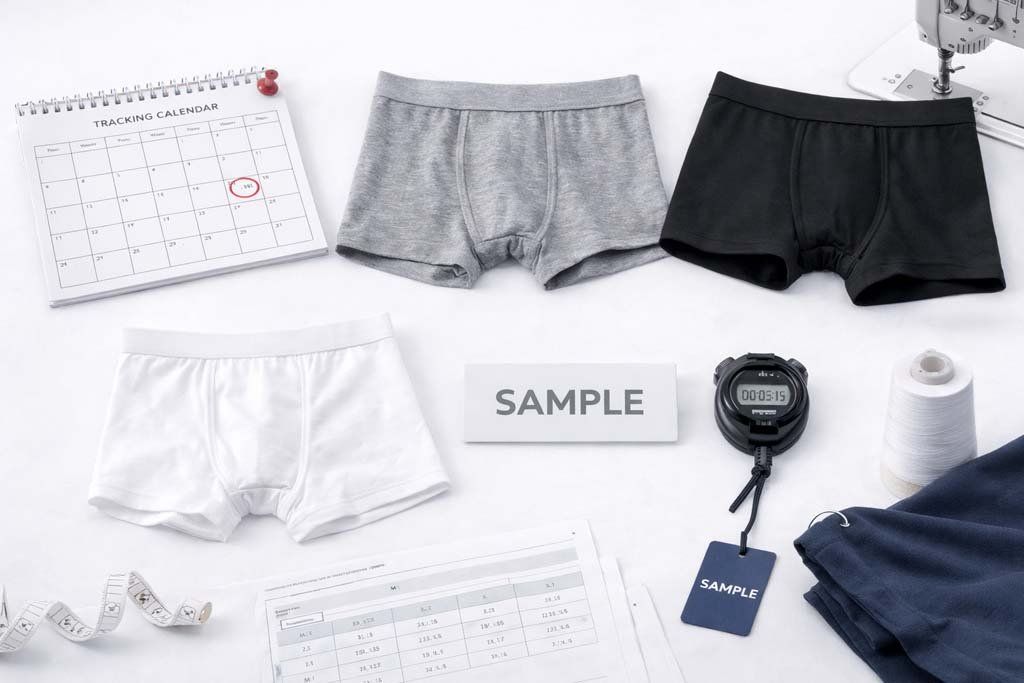
How Men’s Underwear Is Manufactured: A Practical OEM Production Guide
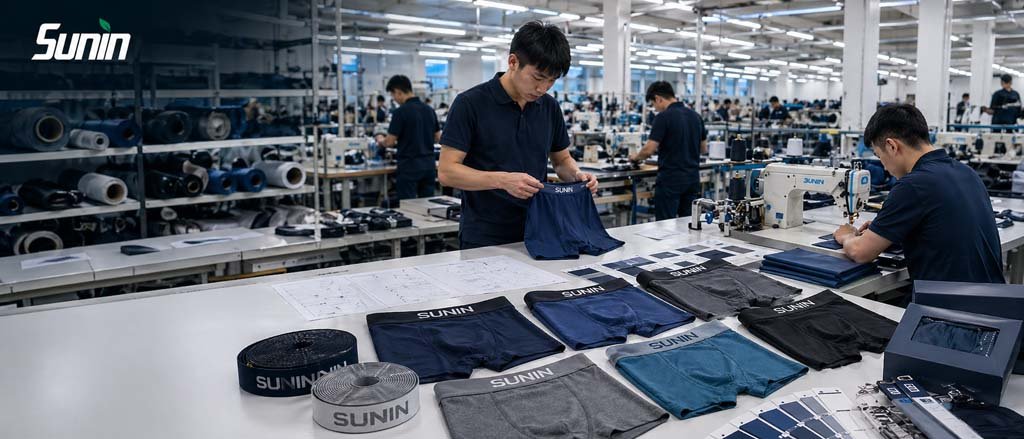
Bring the waistband brief before requesting a production promise.
Share the logo artwork, repeat, colors, width, quantity and garment specification already known.