
Packaging planning guide
Custom Underwear Packaging for Private Label Brands: What to Decide Before Production
Choose a pack format that fits the sales channel, order quantity, artwork, labeling, logistics and destination-market requirements.
ALT: Custom underwear packaging options for private label brands
In This Guide
DTC single packs, retail boxes and multipacks create different requirements.
Printed bags, cards and boxes may not share the garment MOQ.
Confirm the folded garment, materials, labels and market information before bulk.
Table of contents
Custom underwear packaging is often approved late even though it can affect supplier MOQ, artwork timing, carton size and the final packing process. Brands should define the sales channel and pack format early enough for garment and packaging suppliers to work from one plan.
Start with the sales channel
A DTC single pack, retail box and three-pack have different requirements. Before choosing a premium-looking structure, decide whether the product will be shipped individually, displayed on a shelf, sold as a multipack or packed again by a fulfilment center. Packaging should support that route rather than add unnecessary material or handling.
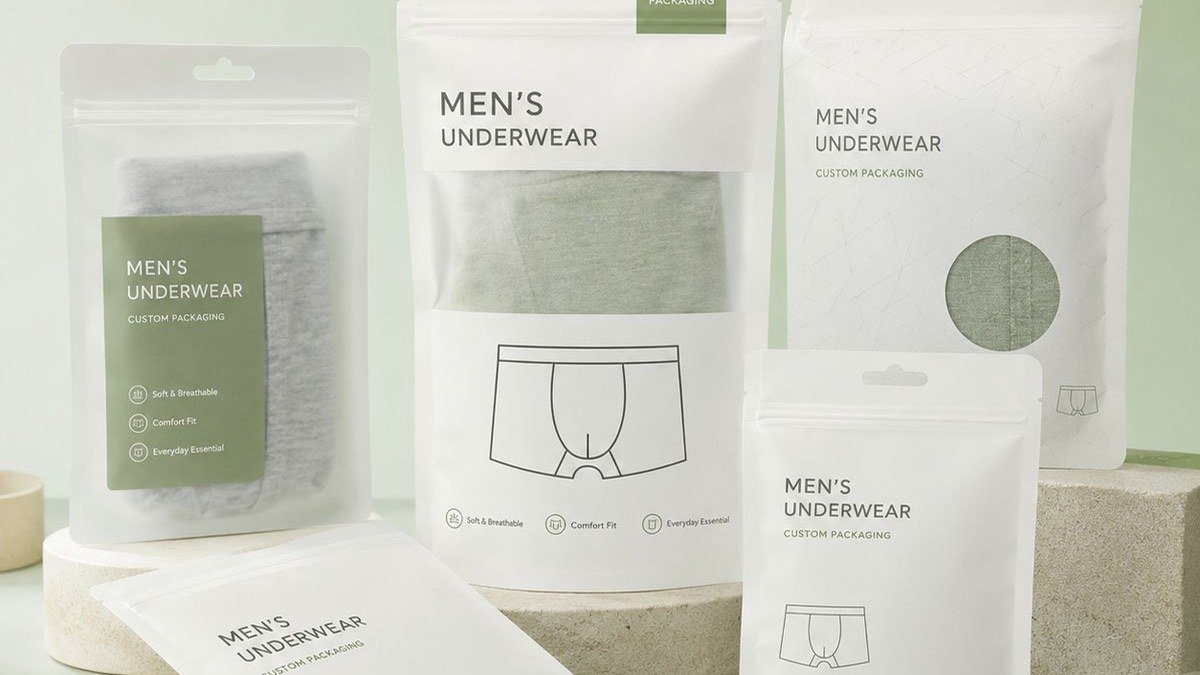
Common packaging formats for private label underwear
Individual bags
Simple bags can protect garments and keep size and color assortments organized. Material, closure, print area, warning information and recycling instructions should be reviewed for the destination market.
Belly bands and insert cards
Paper-based components can carry brand story, size, care or barcode information while keeping the garment visible. Paper weight, coating, print, foil or embossing choices affect appearance, production complexity and recyclability considerations.
Retail boxes and multipacks
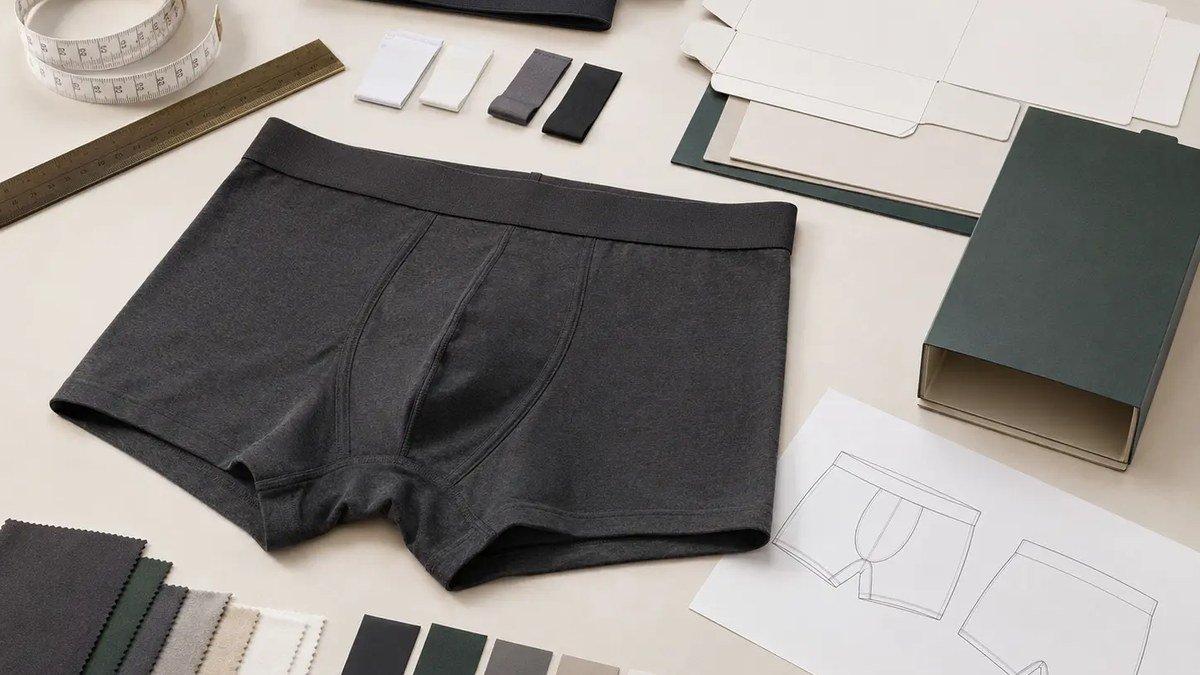
Boxes can support premium presentation or multipack sales, but they also add material, volume and assembly. Confirm the internal dimensions using the folded production garment, not only a graphic mock-up.
Packaging MOQ is separate from garment MOQ
A 1,000-piece garment order does not automatically mean every custom packaging format can be produced at the same quantity. Printed bags, boxes, cards and specialty materials may have their own supplier minimums. Ask the factory to review the combined garment and packaging plan before approving artwork. For garment-order context, see our 1,000-piece MOQ planning guide.
What EU-focused brands should consider
For products sold in the European Union, packaging decisions increasingly need to consider the EU Packaging and Packaging Waste Regulation (Regulation (EU) 2025/40). The regulation generally applies from 12 August 2026, while packaging minimisation requirements in Article 10 apply from 1 January 2030. The exact legal obligations depend on the packaging, market and economic operator, so brands should confirm current requirements with qualified compliance advisers before making regulatory claims.
For practical product development, this means avoiding unnecessary layers, defining what each packaging component does and asking suppliers for material specifications rather than choosing a structure only from appearance. A packaging concept that is attractive but difficult to source at the required quantity is not production-ready.
Artwork and information to lock before bulk
Confirm logo files, colors, dimensions, barcode, country-of-origin wording where applicable, size identification, recycling or disposal information required for the target market, and any legal text supplied by the brand. Proofread final artwork separately from the garment tech pack.
Coordinate packaging with the production schedule
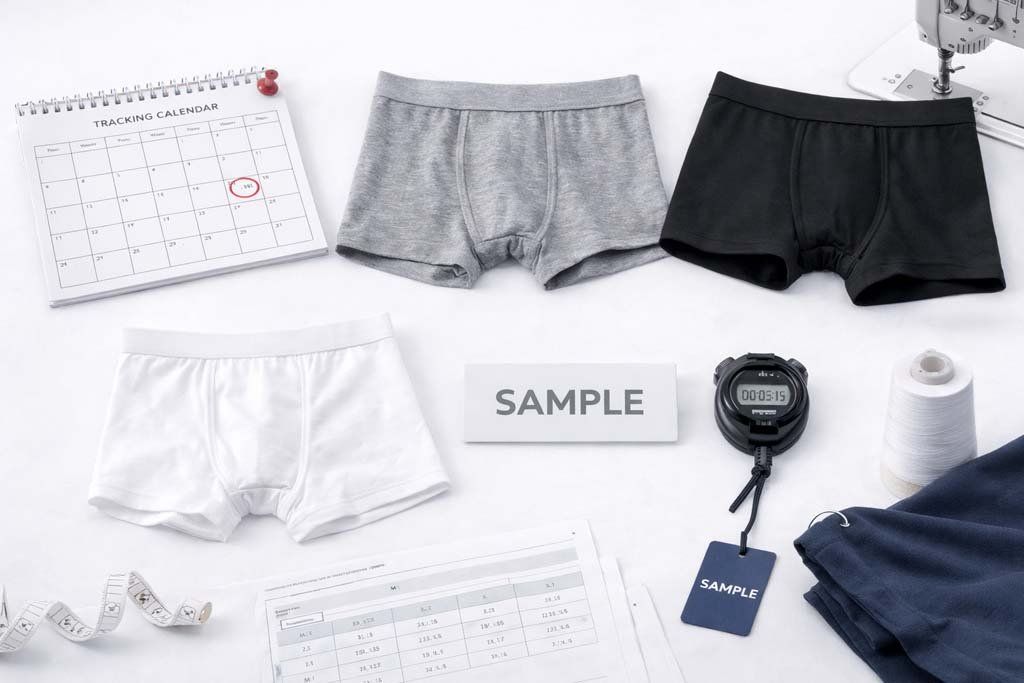
Packaging should be approved early enough to arrive before final packing. Sunin Underwear reviews individual bags, cards, hangtags, boxes and multipack formats by project. Normal bulk production is approximately 60 calendar days after specifications, approved samples, payment and all production information are confirmed. Peak-season or custom-material projects may require approximately 60–75 calendar days; custom packaging can also affect preparation if artwork or supplier minimums remain unresolved. These ranges cover production only and exclude international shipping; they are planning estimates rather than guaranteed delivery dates.
Packaging should be reviewed alongside the garment, fabric and branding plan. For related sourcing considerations, see Sunin’s custom men’s underwear manufacturing service and fabric and process selection guide.
Frequently asked questions
Can I use custom packaging for a 1,000-piece underwear order?
Possibly. The garment and packaging suppliers may have different minimums, so the exact bag, card or box should be reviewed before confirmation.
Should packaging be developed after the garment is finished?
No. The format can affect dimensions, artwork, labels and production timing, so it is better to define it during product development.
Are paper packages always more sustainable than plastic packages?
Not automatically. Environmental performance depends on material, weight, coatings, recyclability, transport and the applicable waste system. Avoid unsupported claims.
What information should I send for a packaging quotation?
Pack format, quantity, dimensions, material direction, print colors, artwork, finishing, barcode or labeling requirements and destination market.
Does Sunin Underwear support multipacks?
Multipack bags, cards or boxes can be reviewed by project together with the garment quantity and packing requirements.
Related resources
How Men’s Underwear Is Manufactured: A Practical OEM Production Guide
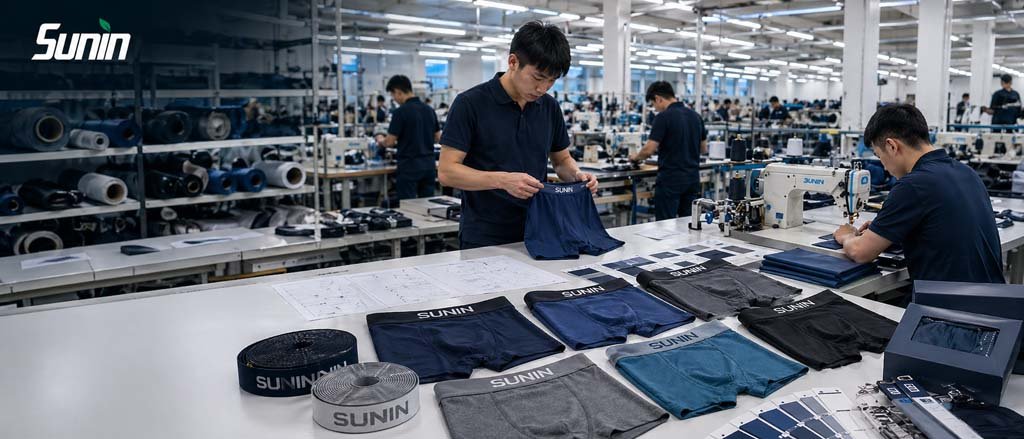
Coordinate the packaging plan with the garment plan.
Share the pack format, quantity, artwork direction, labeling needs, destination and garment specification together.