
Failure analysis guide
Why Men’s Underwear Back Seams Break—and How to Prevent Them
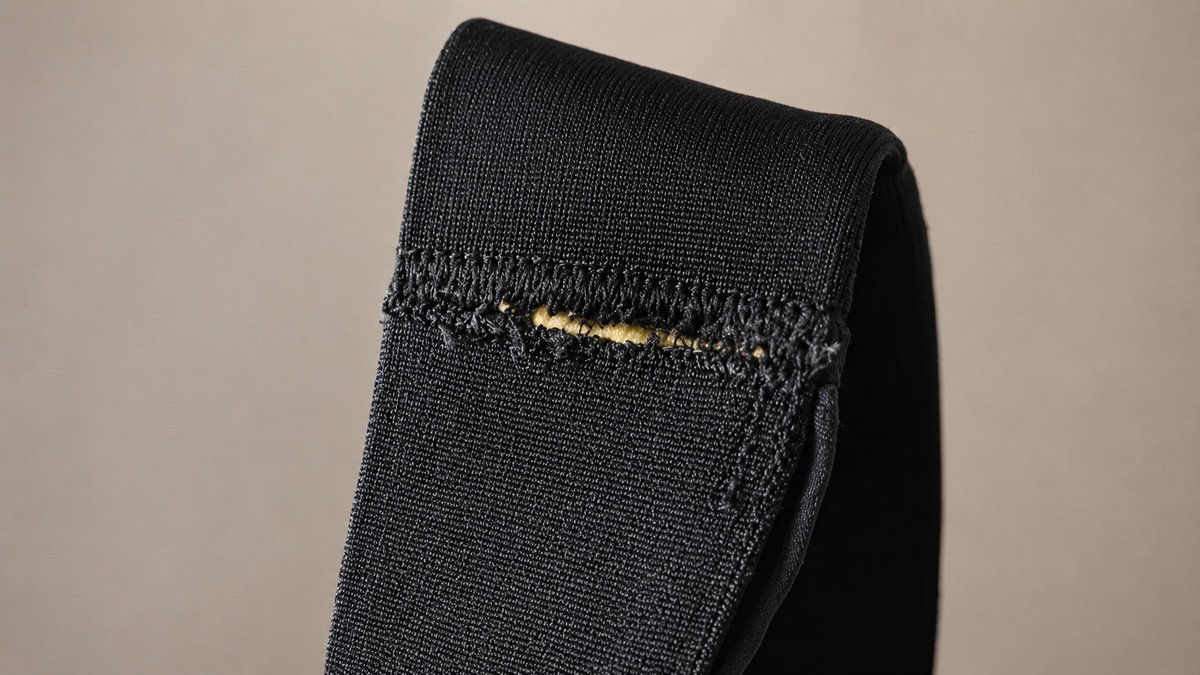
A men’s underwear back seam usually fails because the garment is asking one seam to absorb more stretch than its construction can handle. Common causes include insufficient seam extensibility, an unsuitable stitch or thread combination, excessive sewing tension, a narrow or inconsistent seam allowance, poor fabric recovery, and a pattern or size grade that concentrates strain at the seat.
Decisions this guide helps you control
The center-back area is repeatedly loaded when the wearer sits, bends, walks, pulls the garment on and washes it. Boxer briefs and trunks add another …
Observed failure Likely causes to investigate Development response Thread breaks while fabric remains intact Low seam extensibility, excessive tension…
A strong seam can still fail when the pattern creates excessive tension. Review the back rise, seat width, crotch length, leg opening and waistband ex…
In this guide
- 01Where back-seam stress comes from
- 02Six common failure modes
- 031. Pattern and fit must be checked before sewing settings
- 042. Seam extensibility must match the fabric
- 053. Thread, needle and tension work as a system
- 064. Seam allowance and operator consistency matter
- 075. The waistband joint requires separate review
- 08A practical sample and QC plan
- 09What buyers should send when reporting a seam problem
- 10Frequently asked questions
A men’s underwear back seam usually fails because the garment is asking one seam to absorb more stretch than its construction can handle. Common causes include insufficient seam extensibility, an unsuitable stitch or thread combination, excessive sewing tension, a narrow or inconsistent seam allowance, poor fabric recovery, and a pattern or size grade that concentrates strain at the seat.
For an OEM or private label program, the solution is not simply to “add more stitches.” The fabric, pattern, waistband joint, seam type, thread, machine settings and intended fit must be evaluated as one system during sample development.
Where back-seam stress comes from
The center-back area is repeatedly loaded when the wearer sits, bends, walks, pulls the garment on and washes it. Boxer briefs and trunks add another variable: the leg and seat must move together without pulling the back rise downward. If the pattern is too tight across the seat or the leg opening restricts movement, stress can be transferred to the center-back seam.
The waistband joint may also sit at the center back. That creates a locally thicker area where elastic, fabric layers and multiple stitch lines meet. A poorly balanced joint can produce skipped stitches, weak penetration or a hard point that concentrates force.
Six common failure modes
| Observed failure | Likely causes to investigate | Development response |
|---|---|---|
| Thread breaks while fabric remains intact | Low seam extensibility, excessive tension, unsuitable thread or stitch density | Review stitch type, thread system, tension and extension on the actual fabric |
| Fabric tears beside the stitch line | Needle damage, excessive stitch density, weak fabric, narrow allowance or concentrated strain | Check needle selection, fabric strength, pattern ease and seam allowance |
| Seam opens but thread does not break | Insufficient seam allowance, inconsistent feeding or poor edge control | Correct construction specification and operator method; verify cut-panel accuracy |
| Skipped stitches at the waistband joint | Layer thickness, needle deflection, unsuitable machine setup or uneven feeding | Review the joint construction and machine setup on production-equivalent materials |
| Failure occurs mainly in larger sizes | Size grade, back-rise length, seat width or elastic extension was not validated across the range | Fit-test more than the base size and review grade rules |
| Failure appears after laundering | Shrinkage mismatch, loss of fabric recovery, thread damage or seam distortion | Test the complete garment after the agreed care cycle, not only the fabric roll |
1. Pattern and fit must be checked before sewing settings
A strong seam can still fail when the pattern creates excessive tension. Review the back rise, seat width, crotch length, leg opening and waistband extension together. The intended fit also matters: a close athletic boxer brief and a relaxed trunk should not be evaluated with the same assumptions.
Fit comments should identify where strain occurs and during which movement. “Too tight” is not enough. Record whether the wearer feels pulling at the back rise, seat, crotch or leg opening, and confirm whether the issue is limited to a size or affects the full range.
2. Seam extensibility must match the fabric
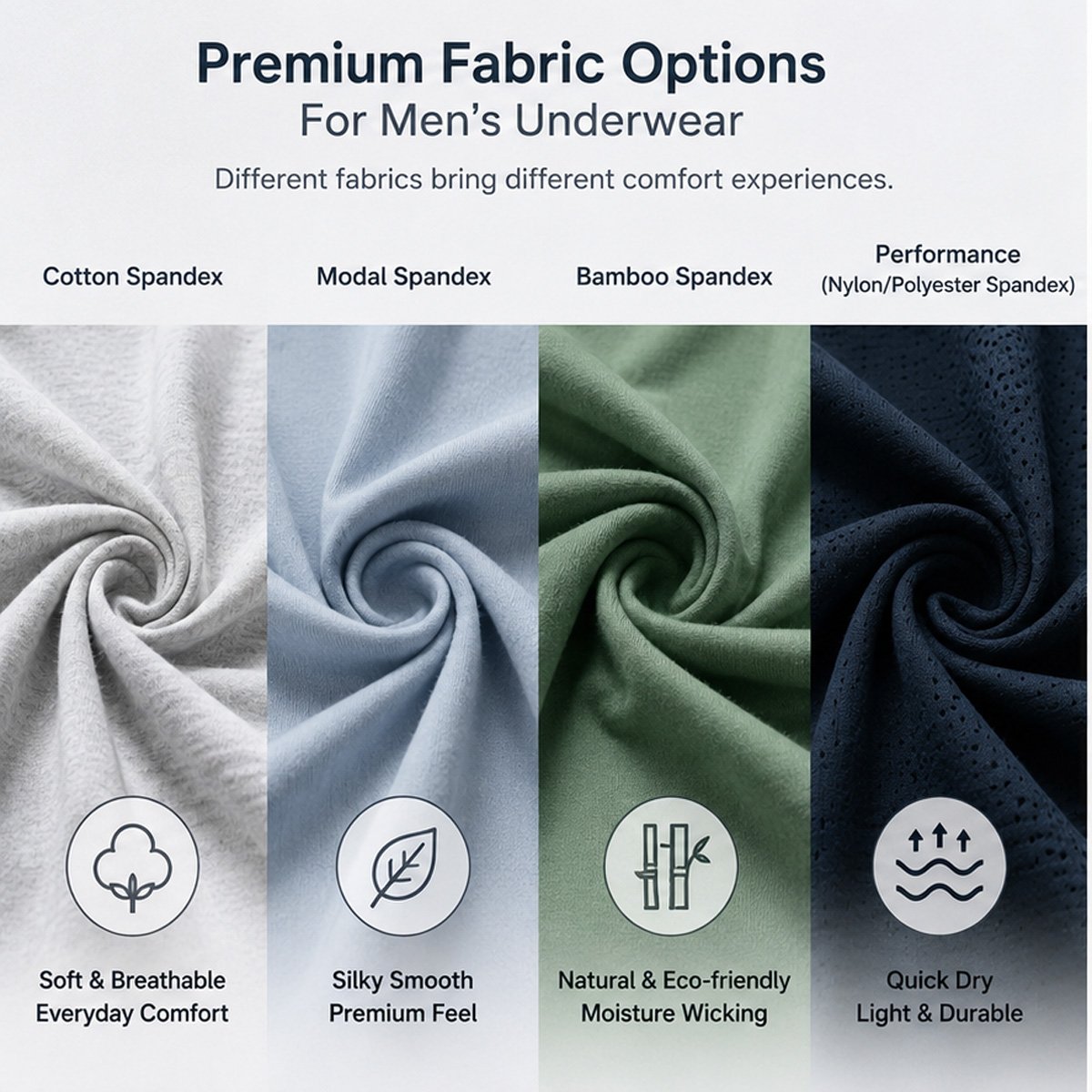
Stretch fabric changes length in wear, so the seam must extend without breaking or permanently distorting. Cotton/elastane jersey, modal/elastane jersey and synthetic performance fabrics can have different stretch direction, recovery and surface behavior even when their fibre percentages look similar.
The factory should evaluate the proposed stitch and thread on the selected production fabric. A construction that works on one jersey cannot automatically be transferred to a lighter, softer or higher-stretch material.
3. Thread, needle and tension work as a system
Thread selection should consider seam type, fabric weight, expected extension and wash requirements. Needle type and size must minimize fabric damage while forming consistent stitches. Machine tension should secure the seam without making it rigid or creating puckering.
More tension is not the same as more strength. Excessive tension can reduce available stretch and increase stress at the stitch holes. Likewise, very dense stitching can damage some knitted fabrics instead of improving durability.
4. Seam allowance and operator consistency matter
The approved sample should define the seam type, allowance, stitch density and any reinforcement. Bulk cutting and sewing then need controls that keep these details consistent. If the allowance varies along the back curve, the weakest section may open even though the rest of the seam appears acceptable.
Reinforcement can be appropriate at selected stress points, but it should be specified for a reason. Adding a hard, bulky bartack in the wrong position may reduce comfort or create a new stress concentration.
5. The waistband joint requires separate review
For garments with a center-back waistband join, check:
- alignment between the elastic joint and body seam;
- bulk created by folded elastic and seam allowances;
- stitch formation through all layers;
- whether the joint edge can irritate the wearer;
- elastic extension and recovery after attachment; and
- visual consistency when the waistband is relaxed and stretched.
A different joint placement or construction may be considered when the design allows it, but the decision should be made during development rather than improvised in bulk production.
A practical sample and QC plan
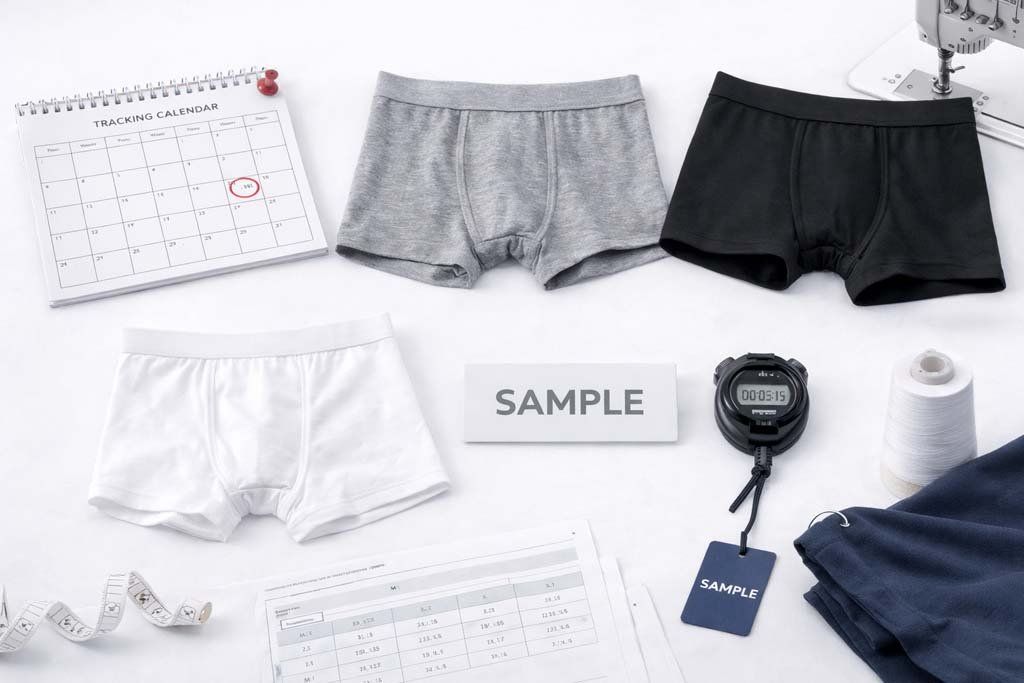
- Define the product. Confirm silhouette, target fit, size range, fabric, waistband and care instructions.
- Inspect the first sample. Check seam allowance, stitch formation, puckering, bulk and comfort at the center back.
- Evaluate movement. Review sitting, bending, squatting and normal dressing across relevant fit sizes.
- Measure recovery. Note whether the seat, waistband and seam return to shape after extension.
- Review after care testing. Use the agreed care method and inspect for thread breakage, seam opening, fabric damage and distortion.
- Lock the specification. Record approved stitch, thread, allowance, tension reference and workmanship standard before bulk cutting.
- Check production. Inspect early output and continue in-line and final checks according to the agreed quality plan.
Test methods, sample quantities and acceptance criteria should be agreed for the specific program. They depend on the material, construction, target market and buyer requirements; they should not be replaced by an unsupported universal claim.
What buyers should send when reporting a seam problem
A useful corrective-action report includes the purchase order or style reference, size, color, batch information, clear photos of both sides of the failure, the point in the use or wash cycle when it occurred, and the number of affected units inspected. If possible, retain failed garments for construction review.
This information helps separate an isolated needle or sewing issue from a pattern, material, size-grade or process problem.
Frequently asked questions
Practical answers for product development and procurement decisions.
Does a broken back seam always mean the thread is weak?
No. The thread may break because the seam cannot extend enough, while the original cause is pattern strain, machine tension, stitch choice or material behavior. The failed garment needs to be inspected as a complete system.
Should every center-back seam be reinforced?
Not automatically. Reinforcement is useful only when its position and construction support the approved design. Excessive or bulky reinforcement can affect comfort and does not correct an unsuitable pattern or seam.
Can the same seam specification be used for cotton and modal?
It should be revalidated. Fibre content alone does not define fabric behavior. Knit construction, weight, stretch, recovery and finishing can change how a seam performs.
When should this issue be checked?
During pattern and sample development, after agreed care testing, at pre-production confirmation and during bulk quality checks. Waiting until final inspection makes correction more disruptive.
Related resources
Planning a men’s underwear project?
Share the style, expected quantity, fabric, colors, sizes, waistband, packaging and destination already known.